
Your Report Could Save a Child's Life
By Alex Hoehn-Saric, former Chair, U.S. Consumer Product Safety Commission
I've met parents who turned the worst moment of their lives into a report that protected thousands of other children. That report started on a website most people don't know exists: SaferProducts.gov.
As a former Chair of the Consumer Product Safety Commission (CPSC), I learned that one of the agency's most underutilized resources is the American public. The CPSC only has a few hundred staff whose time and attention are largely dedicated to addressing known product safety risks. They need your help to identify dangerous consumer products. Addressing new risks often starts not in our labs, but with a parent who took a few minutes to file a report. CPSC cannot be everywhere. You are.
Today, millions of consumer products are sold directly to American families through online marketplaces, many from overseas sellers with little to no oversight. Recent cuts to CPSC's budget and staff have made it even more difficult for the agency to identify new hazards, warn the public, and develop mandatory standards to permanently address safety problems. And even when rules are in place or a recall issued, caregivers can provide help spotting when a manufacturer or retailer ignores the law and sells violative products.
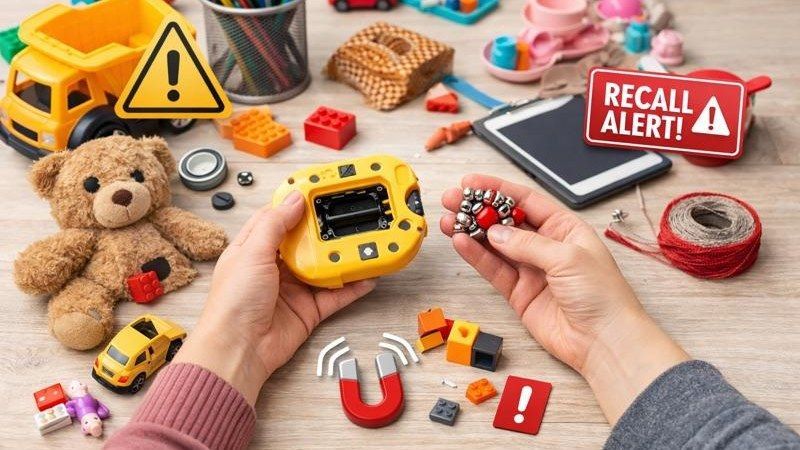
Consider what it took to address the danger of button cell and coin batteries. When these batteries are swallowed, they can cause serious injuries, internal chemical burns, and death. The passage of Reese's Law was driven in large part by reports and advocacy by families whose children suffered these horrible injuries and chose to speak out. Their reports helped document a pattern of harm needed for the CPSC to engage and ultimately for Congress to act. To implement Reese's Law, CPSC established standards to ensure that products with button cell batteries are manufactured more safely, and the agency is policing the marketplace to ensure compliance.
Reports from the public on dangerous products have prompted CPSC action on countless children and infant products, including inclined sleepers, water beads, and individual toys that were poorly made. CPSC staff take reports of near injuries, injury and death extremely seriously. Agency investigations include internal testing, outreach to affected families, manufacturer engagement, and may ultimately result in a recall or changes in safety regulations.
SaferProducts.gov is where the public can file and read safety-related complaints about consumer products. Don't be intimidated. Provide the information about the product and the incident that you have and CPSC can take it from there. Don't stop at leaving a bad review on a website. Take the extra few minutes and get the details of your child's injury or near injury to the people empowered to do something about it: the CPSC.
As Chair, I always appreciated the support and work of parents to protect others in the community. Many have transformed their personal tragedies into advocacy campaigns to protect other children. They have made a real difference in product safety. I ask you to do the same. Your report could prevent future injuries. Thank you.
Alex Hoehn-Saric served as Chair of the U.S. Consumer Product Safety Commission from October 2021 through January 2025.

This is paragraph text. Click it or hit the Manage Text button to change the font, color, size, format, and more. To set up site-wide paragraph and title styles, go to Site Theme.
Stay close
We send a note when something changes. New legislation. A serious recall. A new partner. A milestone in the work. No spam. Just a word directly from us.
Suspect a child has swallowed a button battery?
Time matters. A button battery lodged in a child's esophagus can cause serious tissue damage in two hours. Do not wait for symptoms. Call the National Battery Ingestion Hotline immediately, and go to a hospital emergency department that has both an operating room and X-ray capability.