Know the Difference: Recalls vs. Warnings
As a parent, you've seen the headlines such as "CPSC Recalls Crib" or "CPSC Issues Product Safety Warning on Infant Lounger." Both sound alarming, and both deserve your attention. But they don't mean the same thing.
CPSC Recalls vs. CPSC Product Safety Warnings: What Parents Need to Know
Understanding the difference between these two outcomes can help you protect your family more effectively.
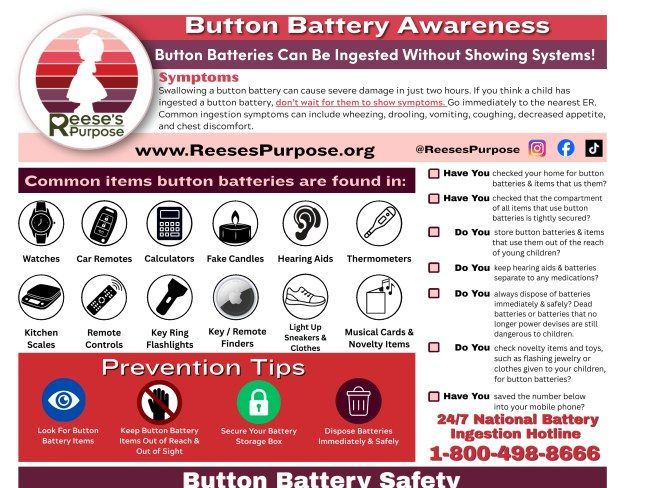
In the world of Reese's Purpose, you've seen the many recall headlines describing violations of Reese's Law. A typical CPSC voluntary recall notice will say something like "Light-up Glasses Due to Risk of Serious Injury or Death from Battery Ingestion; Violate Mandatory Standard for Consumer Products with Button Cell Batteries." Recall notices like these have become a regular part of the headlines since Reese's Law took effect. However, not every violation of Reese's Law ends in a recall. Some instead result in a product safety warning. Again, these are slightly different. Let's explore how.
What Is a CPSC Recall?
A recall is the more familiar of the two outcomes. 99.9% of CPSC recalls are voluntary, meaning that the agency works in cooperation with the manufacturer, distributor, or retailer to remove an unsafe product from the market. The key difference is that when a recall is issued, the company has agreed to participate.
Sometimes companies learn about the issue and act quickly and in good faith with the CPSC. Sometimes companies may not initially agree to conduct a recall but eventually do so due to their fear of further enforcement activity or other concerns. And while online commerce websites have provided access to the American market for overseas manufacturers, many of which are selling non-compliant products, these same marketplaces can also quickly shut down those listings if they are made aware of a violation of Reese's Law.
A voluntary recall agreement typically comes with a consumer remedy, which means that you, as the buyer, are entitled to something: a refund, a replacement part, or a free repair. Federal law prohibits any person from selling products subject to a voluntary recall undertaken in consultation with the CPSC. A recall provides a clear remedy and path forward for families who own the product.
What Is a Product Safety Warning (Unilateral Warning)?
A product safety warning, sometimes called a "unilateral warning," is what the CPSC issues when a company won't cooperate. In product safety warning press releases, CPSC urges consumers to immediately stop using the products at issue and notes that the manufacturer, distributor, or retailer has not agreed to recall the products. The agency is essentially going around a company to get the word out directly to you.
This matters, because unilateral product safety warnings do not provide a consumer remedy. There is no refund process. There is no company hotline to call. You simply need to stop using the product and dispose of it on your own. There is no compensation. Of course, we hope that consumers receive and follow these instructions.
Why Are Unilateral Warnings Becoming More Common?
Unilateral warnings are a growing trend parents should be aware of. In 2020, CPSC issued just three unilateral warnings. By 2024, that number had risen to 64, most for products manufactured in China and nearly all sold online on e-commerce websites. The rise of e-commerce has made it easier than ever for overseas sellers to reach American families, but has also made it harder for regulators to hold them accountable. When foreign manufacturers and sellers refuse to act, ignoring communications and refusing to cooperate, the CPSC can either sue the company or warn the public. The difficulty and cost of suing companies overseas is often too much, even for the CPSC, so instead, they warn the public, and retailers typically follow up by removing those products from their shelves.
What Should Parents Do?
The bottom line for both recalls and safety warnings is to immediately stop using the product. The key difference is what happens next. With a recall, contact the company for your remedy. With a safety warning, there is no company remedy available: your only action is to remove the product from your home and dispose of it.
To stay informed, sign up for recall alerts at CPSC.gov, and check the site regularly if you purchase children's (or other) products from online marketplaces. When in doubt, search the product name on the CPSC's SaferProducts.gov website before your child uses it. Your family's safety is worth the extra minute.